| Kidney Stone Pain? Get Treated Today. Dr. Amit Kumar Jha | Bansal Hospital, C Sector Shahpura, Bhopal 462039 Call / WhatsApp: 93401 56457 | dramitjha.com/kidney-stone-management/ |
Guide by the Best Kidney Stone Doctor
If you have ever had a kidney stone, you know the pain is unlike anything else — a sudden, vice-like agony that starts in the back and radiates to the groin, often accompanied by nausea, sweating, and an inability to find any comfortable position. If you are in Bhopal right now searching for the best kidney stone doctor in Bhopal, this is the most complete and honest guide you will find. Dr. Amit Kumar Jha, Senior Consultant Urologist at Bansal Hospital, Shahpura, Bhopal, has performed over 2,000 PCNL surgeries, 500+ URSL procedures, and more than 100 RIRS operations — making him the most experienced kidney stone surgeon in Madhya Pradesh.
This guide tells you exactly what a kidney stone is, what your treatment options are based on your stone size and location, when you need surgery and when you do not, and how to make sure your stones never come back. Patients from Arera Colony, MP Nagar, Habibganj, Kolar Road, Shahpura, and from as far as Sehore, Raisen, and Vidisha come to Dr. Jha at Bansal Hospital because they want the right answer — not just any answer.
What Is a Kidney Stone? The Simple Explanation
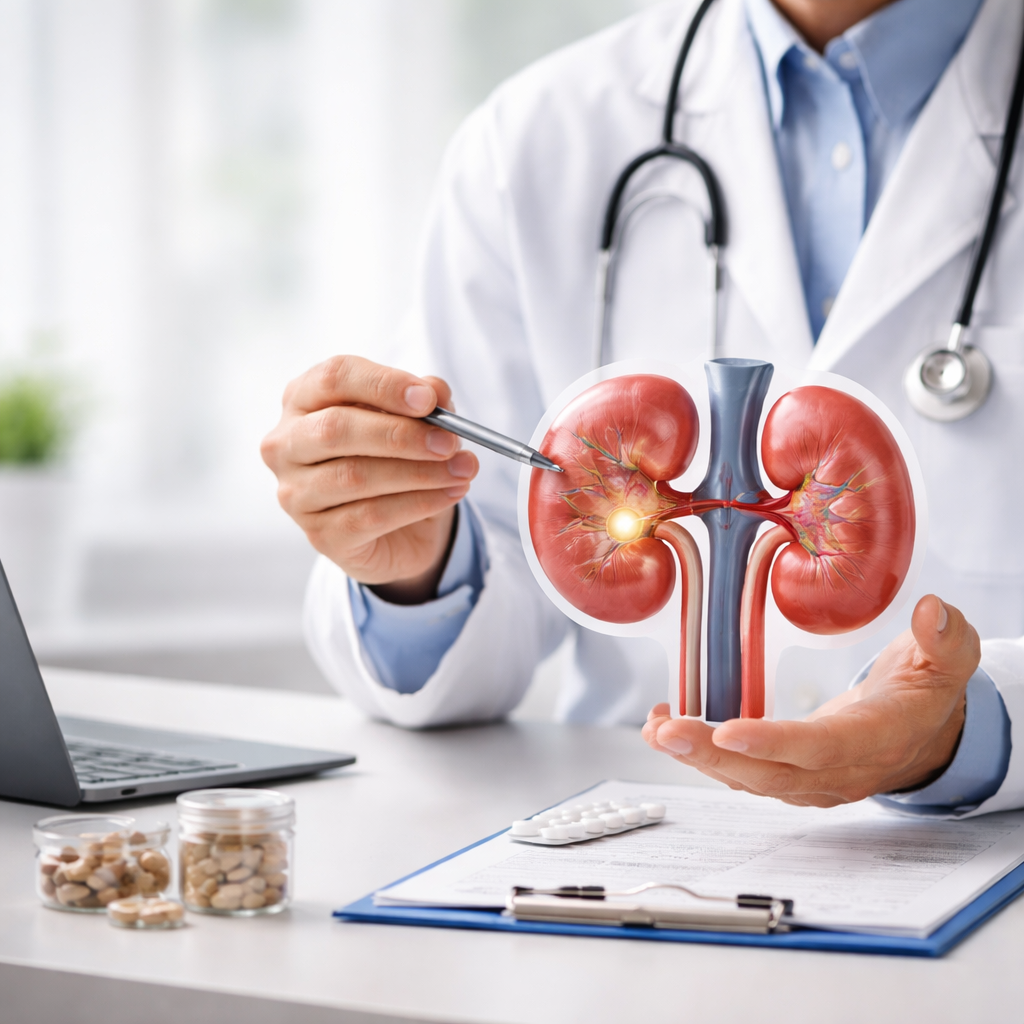
A kidney stone is a hard deposit of minerals and salts that forms inside your kidneys. It starts as tiny crystals in the urine — calcium, oxalate, uric acid — that gradually cluster together into a solid mass. Most stones stay in the kidney silently for months. The pain begins when the stone moves into the ureter — the thin tube connecting kidney to bladder — and gets stuck.
India has one of the highest kidney stone rates in the world. In Madhya Pradesh’s climate — hot summers, high fluoride in some water sources, dietary patterns — the risk is even higher. 1 in 8 people in India will have a kidney stone at some point in their life. Without proper treatment and prevention, recurrence within 5 years is above 50%.
Kidney Stone Symptoms – What Does It Actually Feel Like?
Kidney stone symptoms vary depending on where the stone is located and whether it is moving:
| Symptom | What It Means |
| Sudden severe back or flank pain | Stone has moved into ureter – seek care immediately |
| Pain radiating to groin or inner thigh | Stone passing through lower ureter |
| Blood in urine (pink / red / brown) | Stone scraping ureter lining – very common, needs evaluation |
| Burning during urination | Stone near bladder or urinary tract inflammation |
| Nausea and vomiting with pain | Severe renal colic – pain relief needed urgently |
| Fever + back pain | EMERGENCY – infected stone, go to hospital immediately |
| No symptoms at all | Stone sitting in kidney – may be found on routine ultrasound |
| WARNING: Fever with kidney pain is a medical emergency. This means an infected stone blocking urine flow (obstructive pyelonephritis). Without emergency treatment, it can progress to sepsis within hours. Go to Bansal Hospital casualty immediately or call 93401 56457. |
Why Do Kidney Stones Form? Causes Specific to Bhopal Patients
Understanding why your stone formed is the only way to prevent the next one. Dr. Jha identifies the cause at every consultation:
- Low water intake — the single biggest reason in Bhopal. Drinking less than 1.5L/day in a hot climate concentrates urine dramatically and allows crystals to form.
- High salt diet — salt increases calcium in urine, promoting calcium oxalate stone formation.
- High protein diet — animal protein increases uric acid and reduces citrate, both of which drive stone formation.
- Spinach, tomatoes, nuts, chocolate — high oxalate foods increase oxalate in urine.
- Recurrent UTI — certain bacteria (Proteus) create struvite (infection) stones.
- Hyperparathyroidism — overactive parathyroid gland floods urine with calcium.
- Gout — elevated uric acid causes uric acid kidney stones.
- Family history — if parents had kidney stones, your risk is 2–3 times higher.
At Bansal Hospital, Dr. Jha orders a 24-hour urine metabolic test for every patient with recurrent stones — identifying the exact chemical imbalance causing their stones and correcting it with targeted dietary advice or medication.
How Kidney Stones Are Diagnosed – Tests Dr. Jha Uses
- Ultrasound KUB — first-line imaging, no radiation, detects stone and any kidney swelling
- NCCT KUB (Non-contrast CT scan) — gold standard. Shows exact stone size, number, location, density, and any anatomical problems. Takes 5 minutes.
- Urine routine and microscopy — checks for blood, infection, crystals, and pH
- Blood test — serum creatinine (kidney function), calcium, uric acid, phosphate
- Urine culture — mandatory if fever is present to identify the infecting bacteria
- 24-hour urine collection — for recurrent stone patients, measures calcium, oxalate, citrate, uric acid, and volume to find your metabolic risk
Most patients receive a definitive diagnosis within the same day of their first consultation with Dr. Jha. The CT scan result tells him exactly which procedure is right for you — and he explains it in plain language before any decision is made.
Kidney Stone Treatment Options in Bhopal – The Complete Picture
The right treatment depends entirely on stone size, stone location, stone composition, and patient health. Here is how Dr. Jha — the best kidney stone doctor in Bhopal — decides:
| Stone Size | Location | Procedure | Stay | Stone-Free Rate |
| Below 5mm | Ureter or kidney | Medical therapy + fluids | None | Up to 80% |
| 5–10mm | Upper ureter / kidney | ESWL (shockwave) | Day case | 70–80% |
| 5–15mm | Ureter | Laser URS / URSL | 24 hours | 95%+ |
| 10–20mm | Kidney | RIRS (flexible laser) | 24 hours | 90%+ |
| Above 20mm | Kidney | PCNL / Mini-PCNL | 2–3 days | 95%+ |
| Staghorn / complex | Kidney | PCNL (Dr. Jha specialty) | 3–5 days | 90%+ |
Option 1: Medical Expulsive Therapy – Pass the Stone Naturally
For stones smaller than 5mm, the stone may pass on its own within 2–4 weeks with the right support. Dr. Jha prescribes:
- Tamsulosin (alpha-blocker) — relaxes the ureter muscle, allowing the stone to pass with significantly less pain
- High fluid intake — 3+ litres daily to create urine flow that pushes the stone along
- Pain relief medication — to manage renal colic during the process
- Follow-up ultrasound at 2–4 weeks — to confirm the stone has passed and no kidney swelling remains
Important: Do NOT try this approach if you have fever, a single kidney, or if the pain is uncontrollable. These require immediate specialist intervention.
Option 2: ESWL – Shockwave Therapy (No Anaesthesia, No Incision)
ESWL (Extracorporeal Shock Wave Lithotripsy) uses focused ultrasound shockwaves directed from outside the body to fragment stones into sand-like particles that pass in the urine. It is the most truly non-surgical kidney stone treatment available.
- No needle, no incision, no anaesthesia required in most cases
- Patient lies on a padded table for 45–60 minutes while shockwaves are delivered
- Goes home the same day
- Stone fragments pass over 2–4 weeks after treatment
- Best for: Stones 5–20mm in the renal pelvis or upper ureter with normal kidney anatomy
- Not suitable for: Very hard stones (calcium oxalate monohydrate), pregnancy, blood thinners, severe obesity, or anatomical obstruction below the stone
Option 3: RIRS – Retrograde Intrarenal Surgery (Scarless Laser)
RIRS is the most patient-friendly surgical kidney stone treatment. A thin flexible ureteroscope is passed through the urethra, up the ureter, and into the kidney itself — with zero punctures and zero external wounds. A holmium laser fibre then pulverises the stone into dust.
- No cuts, no punctures, no scars — completely scarless
- Performed under spinal or general anaesthesia — painless during procedure
- Stones in any position in the kidney reached and cleared
- Most patients discharged within 24 hours
- Stone-free rate above 90% for stones up to 20mm
- Best for: Stones 10–20mm, multiple small stones, stones in difficult kidney positions
Dr. Jha has performed over 100 RIRS procedures at Bansal Hospital. This is the procedure most patients from MP Nagar, Arera Colony, and Shahpura choose when they want the fastest return to normal life.
| Patient Story Meera, 34, MP Nagar, Bhopal: “I had a 1.4cm stone in my right kidney and was terrified of surgery. My gynaecologist referred me to Dr. Jha at Bansal Hospital. He explained RIRS to me in simple terms — no cuts, laser breaks the stone, I go home tomorrow. I went in at 9am, woke up at 11am with no pain, and was discharged the next morning. My follow-up CT showed zero stones. I cannot believe how easy it was compared to what I had imagined.” |
Option 4: PCNL – The Gold Standard for Large Stones
PCNL (Percutaneous Nephrolithotomy) is the most powerful kidney stone surgery — and Dr. Jha has performed over 2,000 of them. A small 1cm puncture in the back (under X-ray or ultrasound guidance) gives direct access to the kidney. A nephroscope removes even the largest, most complex stones in a single session.
- 2,000+ PCNL surgeries performed by Dr. Jha at Bansal Hospital
- Staghorn stones — stones that fill the entire kidney — cleared in one procedure
- Mini-PCNL available — an even smaller puncture (5mm) for medium-large stones
- Hospital stay: 2–3 days for standard PCNL, sometimes less for mini-PCNL
- Temporary ureteral stent placed after surgery — removed at a follow-up visit
- Blood in urine after PCNL is normal and clears within 2–3 days
- Best for: Stones above 20mm, staghorn stones, failed ESWL, multiple large stones
| Patient Story Ramesh, 52, Sehore: “I had been told I needed open surgery for my 3cm staghorn stone. My nephew, who lives in Habibganj Bhopal, insisted I see Dr. Jha at Bansal Hospital first. Dr. Jha did PCNL. One small hole in my back. I was completely stone-free in 48 hours and went home on day 3. No open surgery, no large scar. I had been living with this stone and recurrent infections for 2 years. I wish I had come sooner.” |
Option 5: URSL – Laser for Ureteral Stones
When a stone is stuck in the ureter — causing the classic flank-to-groin pain — URSL (Ureteroscopic Stone Laser) is the fastest solution. A thin rigid or flexible ureteroscope passes naturally through the urethra and bladder into the ureter. Holmium laser shatters the stone immediately. Over 500 URSL procedures performed by Dr. Jha.
- No incision, no puncture
- Stone-free rate above 95% for ureteral stones
- Most patients discharged within 24 hours
- Immediate relief from ureteral colic
| Not Sure Which Treatment Is Right for Your Stone? Dr. Jha reviews your CT scan and gives you a clear treatment plan at your first consultation. Call / WhatsApp: 93401 56457 OPD 137, First Floor, Bansal Hospital, C Sector Shahpura, Bhopal 462039 Online: dramitjha.com/kidney-stone-management/ |
How to Prevent Kidney Stones From Coming Back – Dr. Jha’s Protocol
Treating the stone is only half the job. Without prevention, more than 50% of kidney stone patients have a second stone within 5 years. Dr. Jha’s prevention programme is specific to your stone type and risk factors:
| Stone Type | Specific Prevention Strategy |
| Calcium Oxalate (most common) | Reduce oxalate foods (spinach, nuts, chocolate), low salt, adequate calcium from diet, 3L fluids/day |
| Uric Acid | Reduce animal protein, alkalinise urine (sodium bicarbonate), allopurinol if uric acid very high |
| Struvite (infection stones) | Treat underlying UTI completely, culture-guided antibiotics, regular urine cultures |
| Calcium Phosphate | Rule out hyperparathyroidism, acidify urine, reduce alkali intake |
Universal prevention for all stone types:
- Drink 2.5–3 litres of water every day — make your urine pale yellow, not dark. This is the single most effective prevention.
- Reduce salt to less than 5g per day — high sodium increases urinary calcium directly.
- Reduce animal protein — red meat, chicken, fish all increase uric acid and reduce citrate.
- Eat adequate dietary calcium (from food, not supplements) — low calcium diet actually increases oxalate absorption.
- Follow-up ultrasound every 6–12 months for the first 3 years after treatment.
- 24-hour urine metabolic test — identifies your specific imbalance so Dr. Jha can correct it precisely.
Bhopal Mein Pathri Ka Ilaj – Aapke Sawal, Dr. Jha Ke Jawab
Bahut se patients Google pe search karte hain: ‘pathri ka operation Bhopal’, ‘kidney stone ka dard’, ‘Bhopal mein best stone doctor’. Agar aapko ya aapke ghar mein kisi ko bhi peth ya kamar mein tez dard ho, ya urine mein khoon aaye — ek baar Bansal Hospital zaroor aayein.
Dr. Amit Kumar Jha ne 2000 se zyada PCNL operations kiye hain — MP mein sabse zyada experienced kidney stone surgeon hain. Aaj hi call karein: 93401 56457. WhatsApp bhi same number pe available hai.
Patients From Across Bhopal and MP Come to Dr. Jha
Bansal Hospital is located in C Sector Shahpura — the most accessible part of Bhopal for stone patients coming from all directions:
- Arera Colony & TT Nagar – 15–20 minutes via Hoshangabad Road
- MP Nagar (Zone 1 & 2) – 20 minutes
- Habibganj / Rani Kamlapati Station – 15 minutes via ISBT Road
- Kolar Road & Ayodhya Bypass – 20–25 minutes
- Shahpura & Salaiya – on-site, walking distance
- Sehore, Raisen, Vidisha, Hoshangabad – 45–90 minutes; patients regularly make this journey specifically for Dr. Jha
Why Choose Dr. Amit Kumar Jha for Kidney Stone Treatment in Bhopal?
| Factor | Dr. Jha at Bansal Hospital |
| Experience | 2,000+ PCNL | 500+ URSL | 100+ RIRS — highest volume in MP |
| Training | MCh Urology, SMS Medical College Jaipur | Apollo Delhi | SGPGI Lucknow |
| Technology | Holmium laser | Flexible ureteroscopes | C-arm fluoroscopy | Mini-PCNL — all at Bansal Hospital |
| Hospital | NABH Accredited Bansal Hospital — highest quality certification in India |
| Recovery | RIRS: Same day. URSL: 24 hours. PCNL: 2–3 days. No prolonged hospital stays. |
| Prevention | 24-hour urine metabolic testing and personalised prevention plan for every recurrent stone patient |
Frequently Asked Questions – Kidney Stones Bhopal
Q1: Can kidney stones be treated without surgery in Bhopal?
Yes. Stones smaller than 5mm can pass naturally with fluids and medication. Stones up to 2cm are treated with RIRS or ESWL — both completely scar-free. Only stones above 2cm or complex staghorn stones need PCNL, which uses a small 1cm puncture (not open surgery). Dr. Amit Kumar Jha at Bansal Hospital offers all these options and recommends the least invasive effective approach for every patient.
Q2: Who is the best kidney stone doctor in Bhopal?
Dr. Amit Kumar Jha at Bansal Hospital, Shahpura, Bhopal, is Madhya Pradesh’s most experienced kidney stone surgeon — with 2,000+ PCNL, 500+ URSL, and 100+ RIRS procedures performed. He trained at SMS Medical College Jaipur, Apollo Hospital Delhi, and SGPGI Lucknow. Contact: 93401 56457.
Q3: What is RIRS and how is it different from PCNL?
RIRS (Retrograde Intrarenal Surgery) is a completely scarless procedure where a flexible camera is passed through the natural urinary passage into the kidney and laser breaks the stone. No puncture, no incision. Best for stones 10–20mm. PCNL uses a small 1cm puncture in the back for direct kidney access — best for stones above 20mm or complex stones. Both are performed by Dr. Jha at Bansal Hospital, Bhopal.
Q4: How many days rest is needed after kidney stone surgery?
After RIRS: Most patients go home within 24 hours and return to desk work in 3–5 days. After PCNL: Discharge in 2–3 days, light activity in 1 week, full activity in 2 weeks. After URSL (ureter stone laser): Same-day or 24-hour discharge, back to work in 2–3 days.
Q5: How do I find Dr. Jha’s clinic — urologist near me in Bhopal for kidney stones?
Dr. Amit Kumar Jha is at OPD 137, First Floor, Bansal Hospital, C Sector Shahpura, Bhopal 462039. Reachable from Arera Colony, MP Nagar, Habibganj, Kolar Road, and Shahpura within 15–25 minutes. Call or WhatsApp 93401 56457. Find on Google Maps: search ‘Dr. Amit Kumar Jha Bansal Hospital Bhopal’. Book online at dramitjha.com/kidney-stone-management/
Conclusion – The Right Kidney Stone Doctor in Bhopal Changes Everything
A kidney stone is not just a painful episode — it is a sign that something in your urinary chemistry needs to be corrected. Treating the stone without understanding why it formed guarantees a second stone. Dr. Amit Kumar Jha at Bansal Hospital does both — removes the stone with the most advanced, least invasive technique available, and then identifies and corrects the root cause so it never comes back.
With 2,000+ PCNL surgeries, the full range of stone treatment technology at NABH-accredited Bansal Hospital, and 19 years of specialist experience — Dr. Jha is not just the best kidney stone doctor in Bhopal. He is the most complete kidney stone specialist in Madhya Pradesh.
Do not live with kidney stone pain. Call or WhatsApp 93401 56457 today and get a clear diagnosis and treatment plan at your first consultation.
| Book Your Kidney Stone Consultation Dr. Amit Kumar Jha – Best Kidney Stone Doctor in Bhopal Call / WhatsApp: 93401 56457 OPD 137, First Floor, Bansal Hospital, C Sector Shahpura, Bhopal 462039 dramitjha.com/kidney-stone-management/ | Google Maps: Dr. Amit Kumar Jha Bansal Hospital Bhopal |
| Written & Medically Reviewed By Dr. Amit Kumar Jha MBBS – Grant Medical College, Mumbai | MS General Surgery – GSVM Medical College, Kanpur | MCh Urology & Renal Transplantation – SMS Medical College, Jaipur Senior Consultant Urologist & Renal Transplant Surgeon | Bansal Hospital, NABH Accredited | 19 Years Experience 2,000+ PCNL | 500+ URSL | 100+ RIRS | Special Interest: Kidney Stone Disease, Laser Urology, Genitourinary Cancers GMB: Dr. Amit Kumar Jha Bansal Hospital Bhopal | Web: dramitjha.com | Contact: 93401 56457 |